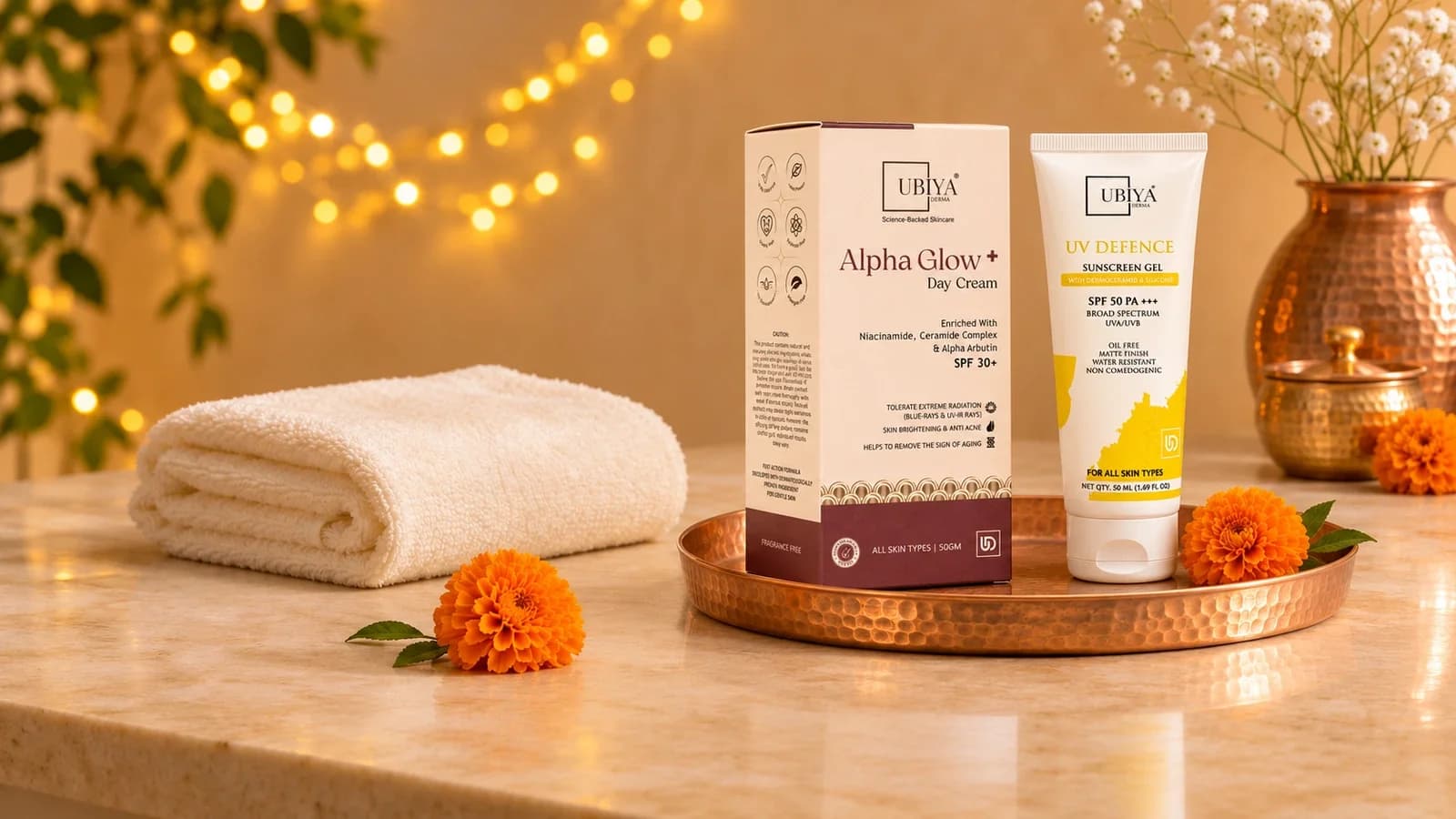

Welcome to UBIYA DERMA
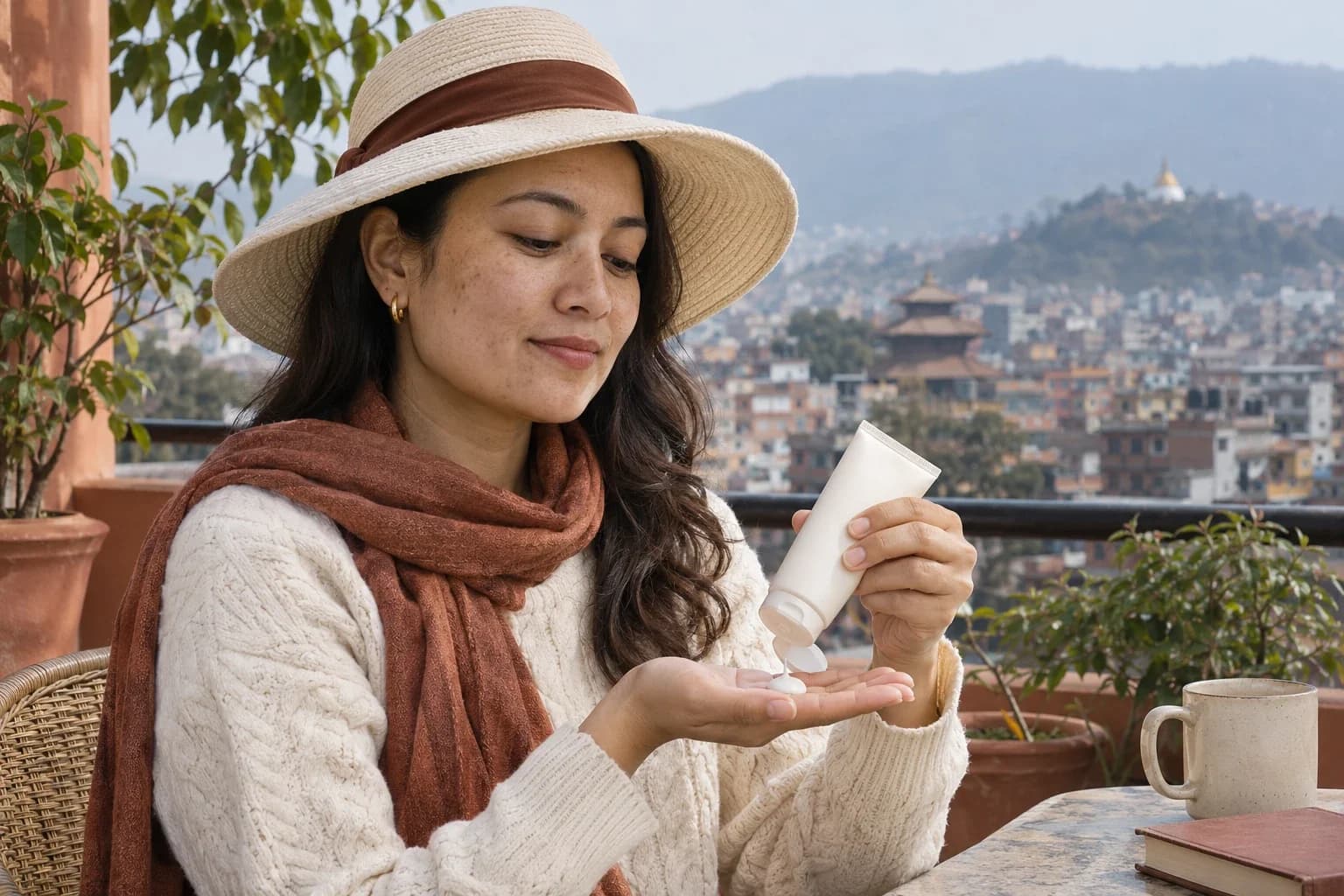
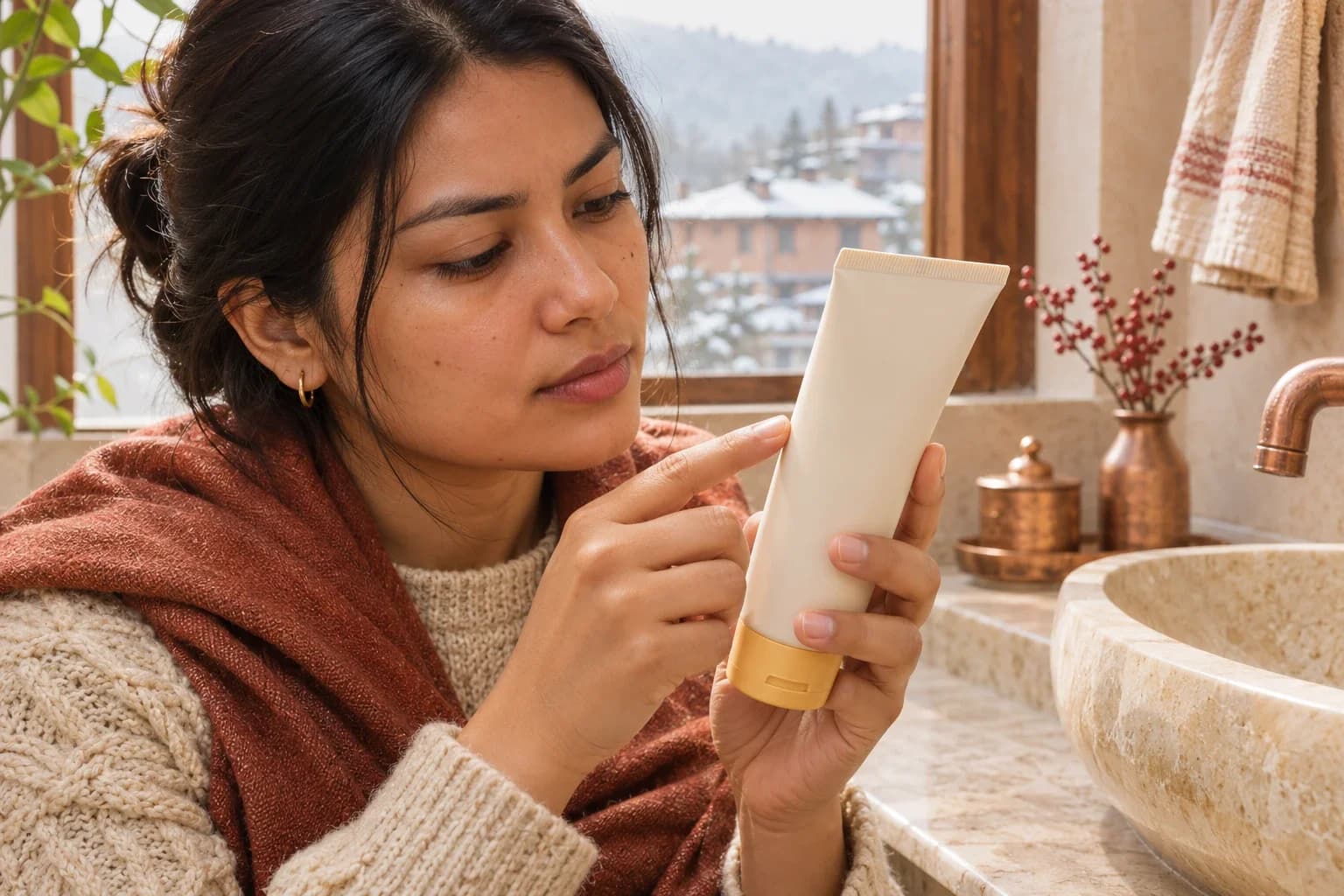
Winter can change the way your skin feels before you even step outside. After washing your face, your cheeks may feel tight. By midday, a dry patch around your nose may be easier to see. A sunscreen you enjoyed in warmer months may still offer the protection you want, but its finish may feel less comfortable when your skin is dry. If that sounds familiar, a hydrating sunscreen can make your winter routine easier to stick with.
Across Nepal, winter can mean fog in the Terai, crisp afternoons in the hills or bright days at higher elevations. Your morning routine can be simple in all three settings. Start with gentle cleansing, moisturise as needed and use broad-spectrum sunscreen on exposed skin. Adjust how and when you reapply based on how much of the day you spend outdoors.
Temperature tells you how cold the air feels. The UV Index tells you how strong the sun’s ultraviolet radiation is expected to be. UV can reach you through cloud cover, and exposure can increase at higher elevations. Snow can also reflect UV, adding to the radiation that reaches exposed skin. Checking the local UV Index is especially useful when your plans take you somewhere with different weather or elevation. Read the World Health Organization’s guide to UV exposure.
Think about the time you actually spend outdoors. A foggy start in the plains can turn into a brighter afternoon, while a stop for tea on a hill walk can add more time in direct sun. When you put on a winter jacket or scarf, check what is still uncovered. The ears, sides of the neck and backs of the hands are easy to miss. On long days outdoors, use shade, sunglasses and protective clothing alongside sunscreen. See the American Academy of Dermatology’s winter sun-protection guidance.
If your skin often feels dry across the cheeks or around the mouth, look for a sunscreen you can spread in a generous layer without making those areas feel uncomfortable. Cold air, low humidity and indoor heating can contribute to winter dryness. Very hot water can add to that dry, tight feeling after a wash. Try cleansing with lukewarm water, patting your face gently and applying moisturiser while the skin is still slightly damp. Read the American Academy of Dermatology’s winter skincare guide.
The texture you prefer may change through the season. If your forehead gets shiny but your cheeks feel dry, you can apply a lighter layer of moisturiser on the forehead and a little more on the cheeks. Keep the sunscreen layer generous and even across your face. If your current sunscreen already feels good over your moisturiser and you use it consistently, that routine can work through winter too. A creamy formula is worth trying when comfort is the reason you hesitate to apply or reapply your usual SPF.
Start with broad-spectrum protection, which covers both UVA and UVB, and choose an SPF of at least 30. Then look at the moisturising ingredients. Glycerin and sodium hyaluronate are humectants, ingredients that help draw water into the skin’s outer layer. Ceramides are lipids that help support the moisture barrier. The ingredient list can tell you how a formula is designed, while the texture tells you how it fits into your daily routine. See the American Academy of Dermatology’s sunscreen selection guide.
Also consider what you’ll be doing. For swimming or outdoor activity with heavy sweating, look for a water-resistance claim and follow the label’s reapplication directions. For everyday wear, think about how easily the formula spreads over your moisturiser and how comfortable it feels when you apply a full layer. Those are useful starting points if you’re deciding between a gel, a lotion and a cream.
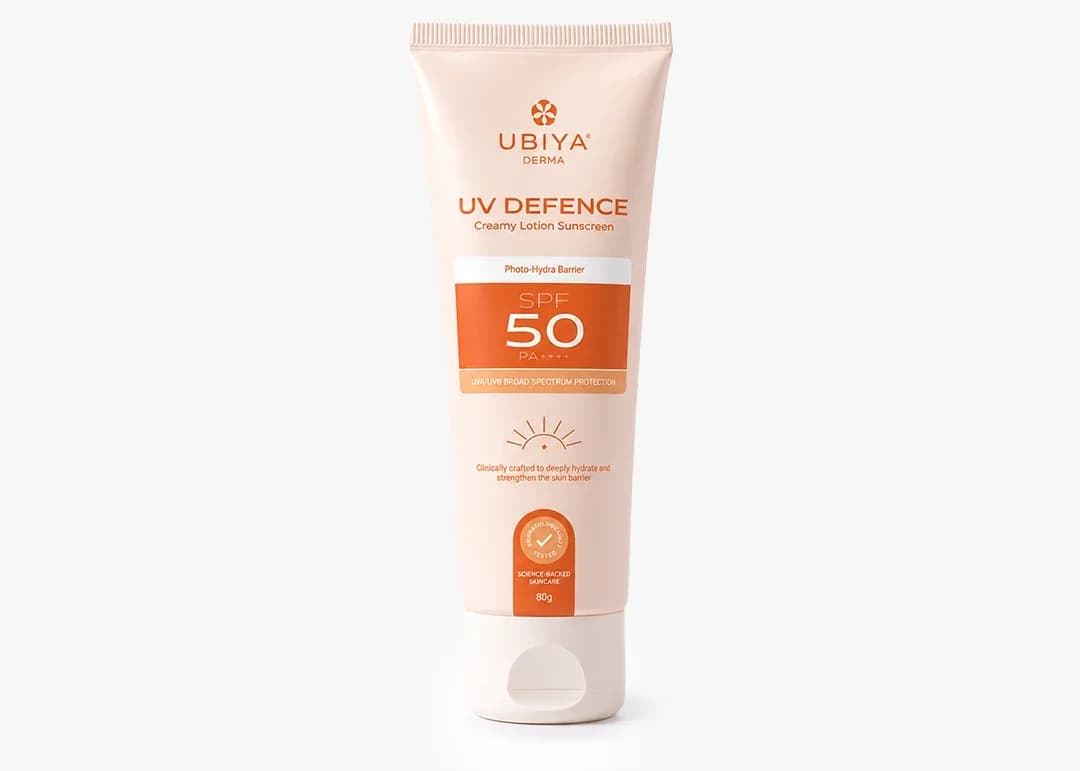
Ubiya Derma UV Defence Creamy Lotion Sunscreen combines broad-spectrum SPF 50 PA+++ with a creamy, non-greasy finish. The fragrance-free 80 g lotion is formulated for normal to dry skin, including sensitive skin. It’s an option if you like the feel of a cream on dry cheeks and want a sunscreen you can layer over your morning moisturiser.
The Photo-Hydra Barrier formula brings together several types of ingredients. Glycerin, betaine and sodium hyaluronate help skin hold moisture. Ceramide NP supports the skin’s moisture barrier, and panthenol, also known as provitamin B5, helps moisturise and soothe skin that feels dry. The formula uses Uvinul A Plus, Tinosorb S, Tinosorb M and micronised titanium dioxide for broad-spectrum UV protection. See the complete UV Defence Creamy Lotion ingredient list.
If you plan to wear makeup, let your moisturiser settle before applying the sunscreen. Once the sunscreen has set, apply makeup with a light touch, especially where your skin tends to flake. If products roll into little bits as you layer them, try simplifying what goes underneath or giving each layer more time to settle. Keep the amount of sunscreen the same.
Cleanse gently. Use lukewarm water and a mild cleanser. Pat your skin dry with a soft towel and leave it slightly damp before moisturising.
Moisturise where you need it. Give extra attention to areas that feel tight after washing, such as the cheeks, jaw or skin around the mouth. Let the moisturiser settle before the next step.
Apply sunscreen before you go out. Smooth a generous, even layer over your face, ears, neck and any exposed skin about 15 minutes before sun exposure. Apply it as the final skincare step, before makeup.
Plan to reapply outdoors. Reapply every two hours while outside. After swimming, sweating or towelling off, follow the product label for reapplication. If you’ll be outdoors through lunch, keep the tube in the bag or coat you’ll have with you.
In the Terai, you might apply sunscreen before a morning commute and reapply before spending the afternoon outside. In the hills, pay attention to the skin left exposed around your collar and scarf on windy walks. If you’re travelling at higher elevations, pack enough sunscreen for reapplication and bring a hat and UV-protective sunglasses, especially where snow covers the ground. A few practical changes can make the same morning routine work wherever you spend winter.
If your job keeps you outside, choose a regular break when you can step into shade, clean your hands and reapply. For an afternoon outdoors that starts after a morning indoors, put on a fresh layer before you head out. A scarf or coat can shift as you work, so check the skin that ends up exposed. If you frequently wash your hands outdoors, remember to cover the backs of your hands again once they’re dry. Read our guide to reapplying sunscreen during an outdoor workday.
Go by how your skin feels through the day. If it stays comfortable with a hydrating sunscreen alone, a single morning layer may be enough for you. If your cheeks still feel tight by lunchtime or flaky areas become more noticeable, try a separate moisturiser underneath. You can also apply moisturiser just where you need it, then spread sunscreen evenly over all exposed skin.
UV can reach the ground through cloud cover, so check the local UV Index and think about how long you’ll be outside. If you’re heading out for errands, an outdoor shift or a hike, include sunscreen on exposed skin in your morning routine. Bring it along if you expect to stay outdoors long enough to reapply.
Yes, if you like how it feels when applied evenly. A shiny forehead and dry cheeks can call for different amounts of moisturiser underneath. Give the formula a try with the layers you normally wear, including makeup if you use it. The right texture is one you can comfortably apply in a generous layer and reapply when you’re outside.
Apply the two products in separate layers. Put moisturiser on first, then use sunscreen on top so you can see where you’ve applied it and cover exposed skin evenly. Take a quick look at the hairline, the sides of the face and around the ears before you leave. These areas are easy to overlook when you get ready in a hurry.
A good winter routine should feel easy to repeat, whether you’re leaving for work in the plains, running errands in the hills or packing for a mountain trip. Start with the amount of moisture your skin needs that day, then apply a generous layer of broad-spectrum SPF. If you prefer a creamy texture that feels comfortable on dry cheeks, explore Ubiya Derma UV Defence Creamy Lotion Sunscreen SPF 50 PA+++.
Rajendra Koirala, B.Sc. (Chemistry), MBA, is the Founder and Managing Director of Ubiya Derma. He has a background in the pharmaceutical industry and works on skincare formulation and product development. He writes about sunscreen, skincare ingredients and everyday routines to help readers better understand and care for their skin.